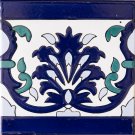
£3.30
Add to Cart
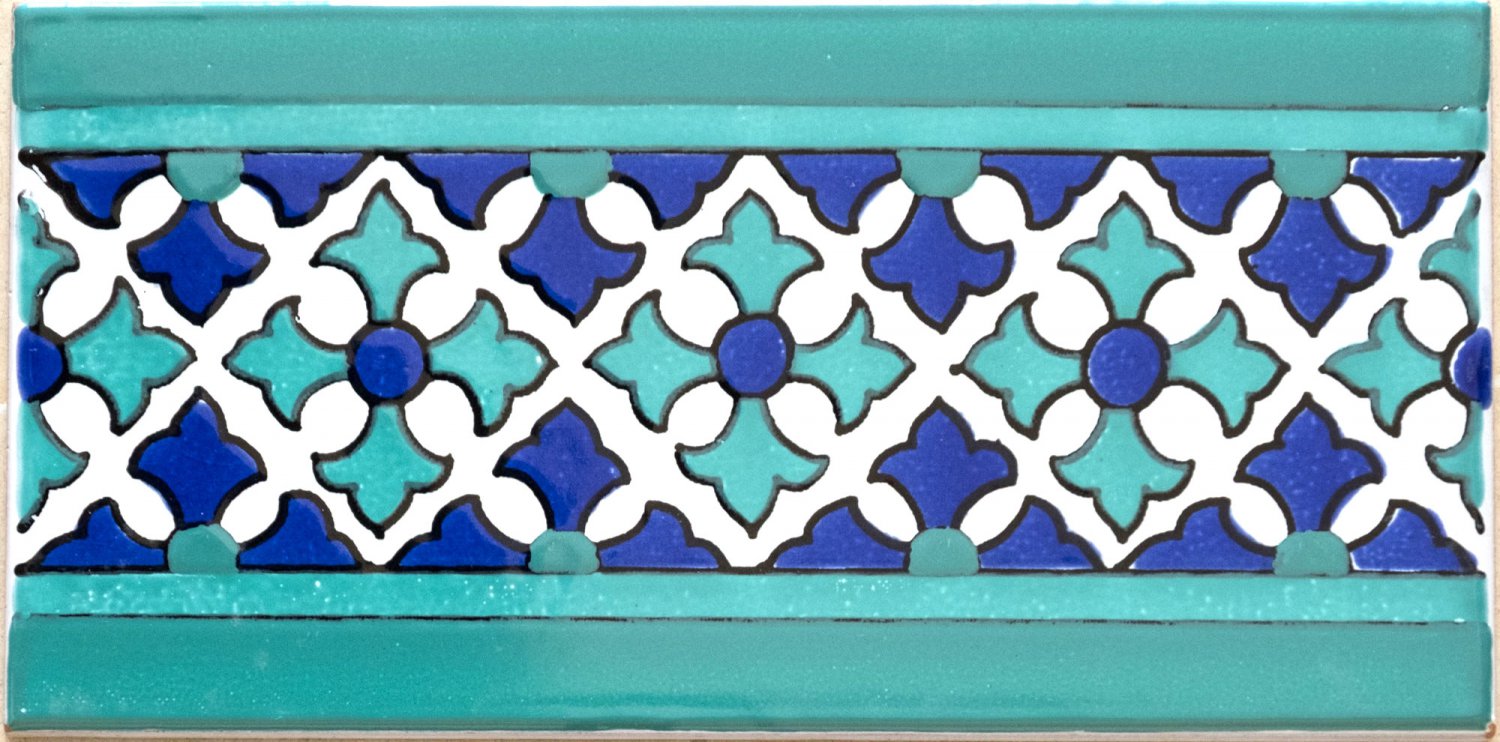
PERLA DESIGN ACCENT BORDER TILE, 8in x 4in, in Antique Ceramic Border Tile
More than 10 available
Details
Shipping: United Kingdom: free (more destinations)
Condition: Brand new
*The store has not been updated recently. You may want to contact the merchant to confirm the availability of the product.
100's of exotic motifs! All unique! Find the right mosaic for your decorating project!
Product type: Ceramic Border Tile - Region: Mediterranean - Method: Hand painted
Dimensions in inches: 8in W x 4in H x 0.25in thick
Dimensions in centimeters: 20cm W x 10cm H x 0.50cm thick
Hand painted. Indoor use. Outdoor use. Low cost int'l shipping
Fired twice! Easy set up. Heavy duty. Weather proof. Fade proof. Frost proof. UV proof.
Need resizing? Custom projects? Questions? Contact seller.
How to install? Tiles ship separate. Tiles can be applied using cement for long term permanent mounting, or can be framed for shorter term applications.
ADDITIONAL INFORMATION OF INTEREST:
- It is a customized ítem.
- The tiles are individually hand painted, fired individually, they are not screened nor printed
HISTORY OF CERAMICS IN TUNISIA:
It is deeply rooted from a distant past in Tunisia, since the Gafsian civilization (city of Gafsa in Tunisia) was in touch with Pharaohs' Egypt, Greece, and Persia. Throughout history the birth of a pottery modeled in Tunisia dates back to the Neolithic ages. Each pottery had a carrier of forms and designs adapted to its function, each form had a cultural value and met a need.
The revival of ceramics in Tunisia coincided with the introduction of the Phoenicians of the Potter's wheel. Extending the tradition and inspired by the Mediterranean countries imported pottery, Punic artisans have turned new forms as the amphorae with sharp bottom, adapted to the maritime transport, as well as dishes and bowls in red or black varnish.
With the advent of islam, Tunisian ceramics enjoyed the fullness of its have, this boom was marked by multiple forms, fancy décor, and a mastery of enamels and glazes. The Aghlabids era ceramics consisted of floral, zoomorphic and geometric motifs announcing the traditional pottery of Nabeul, and Djerba. The Fatimid era ceramics very harmoniously mixed wildlife into human figures. With the Hafsids era, ornaments became more abstract and confined to floral and geometric patterns. Then came the Andalusian influence which introduced the process to identify enamelled patterns in order to get polychrome enamelled tiles, adorned with polygonal geometric figures.
From the 17th century, Tunisian ceramics have been strongly influenced by the Turkish Ottoman empire. The ceramists of Tunis the capital, at Kallaline, still produce now polychrome ceramic items reminiscent of Ottoman Turkey.
Thus over time every region of Tunisia is characterized by a type of pottery and ceramics infused by the past civilizations. The most important ones are:
- Guellala (Djerba): Berber, Greek, Roman.
- Moknine (Sahel): Berber, Byzantine, Arabic.
- Neapolis (Nabeul): Punic, Roman, Andalusian.
- Kallaline (Tunis): Punic, Roman, Andalusian.
Ceramics in Tunisia is experiencing today a real renaissance. The building sector development gave it a new impulse, allowing the emergence of a large number of artisanal and industrial manufacturing units. It is a world in permanent gestation, which feeds on a prestigious past, and constantly renews itself in a fertile diversity.
Product type: Ceramic Border Tile - Region: Mediterranean - Method: Hand painted
Dimensions in inches: 8in W x 4in H x 0.25in thick
Dimensions in centimeters: 20cm W x 10cm H x 0.50cm thick
Hand painted. Indoor use. Outdoor use. Low cost int'l shipping
Fired twice! Easy set up. Heavy duty. Weather proof. Fade proof. Frost proof. UV proof.
Need resizing? Custom projects? Questions? Contact seller.
How to install? Tiles ship separate. Tiles can be applied using cement for long term permanent mounting, or can be framed for shorter term applications.
ADDITIONAL INFORMATION OF INTEREST:
- It is a customized ítem.
- The tiles are individually hand painted, fired individually, they are not screened nor printed
HISTORY OF CERAMICS IN TUNISIA:
It is deeply rooted from a distant past in Tunisia, since the Gafsian civilization (city of Gafsa in Tunisia) was in touch with Pharaohs' Egypt, Greece, and Persia. Throughout history the birth of a pottery modeled in Tunisia dates back to the Neolithic ages. Each pottery had a carrier of forms and designs adapted to its function, each form had a cultural value and met a need.
The revival of ceramics in Tunisia coincided with the introduction of the Phoenicians of the Potter's wheel. Extending the tradition and inspired by the Mediterranean countries imported pottery, Punic artisans have turned new forms as the amphorae with sharp bottom, adapted to the maritime transport, as well as dishes and bowls in red or black varnish.
With the advent of islam, Tunisian ceramics enjoyed the fullness of its have, this boom was marked by multiple forms, fancy décor, and a mastery of enamels and glazes. The Aghlabids era ceramics consisted of floral, zoomorphic and geometric motifs announcing the traditional pottery of Nabeul, and Djerba. The Fatimid era ceramics very harmoniously mixed wildlife into human figures. With the Hafsids era, ornaments became more abstract and confined to floral and geometric patterns. Then came the Andalusian influence which introduced the process to identify enamelled patterns in order to get polychrome enamelled tiles, adorned with polygonal geometric figures.
From the 17th century, Tunisian ceramics have been strongly influenced by the Turkish Ottoman empire. The ceramists of Tunis the capital, at Kallaline, still produce now polychrome ceramic items reminiscent of Ottoman Turkey.
Thus over time every region of Tunisia is characterized by a type of pottery and ceramics infused by the past civilizations. The most important ones are:
- Guellala (Djerba): Berber, Greek, Roman.
- Moknine (Sahel): Berber, Byzantine, Arabic.
- Neapolis (Nabeul): Punic, Roman, Andalusian.
- Kallaline (Tunis): Punic, Roman, Andalusian.
Ceramics in Tunisia is experiencing today a real renaissance. The building sector development gave it a new impulse, allowing the emergence of a large number of artisanal and industrial manufacturing units. It is a world in permanent gestation, which feeds on a prestigious past, and constantly renews itself in a fertile diversity.
Other Products from tunisiandecor (View All)
-
£3.30
-
£3.30

-
£3.30

-
£1,320.12

-
£110.01

-
£95.34

-
£72.61
-
£154.75
-
£3.67
-
£3.67